
Entrevista: Eggebrecht y el desarrollo de la potencia de Wii
El presidente de Factor 5 se sienta con Revogamers para ahondar en las desaprovechadas posibilidades gráficas de Wii y su posición en la industria.
- Redacción
- 26 min de lectura
- 1.150 visitas ( actuales)
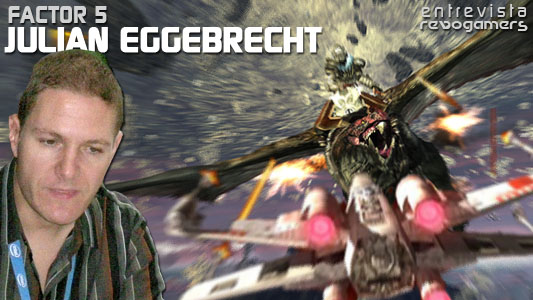
 En 1987, Julian Eggebrecht fundó con cuatro compañeros el estudio Factor 5 en la germana ciudad de Colonia. Sus proyectos crecieron en tamaño y relevancia -con la saga Turrican- hasta iniciar en 1994 una nueva etapa al lado de las grandes desarrolladoras en California. A finales de los 90, tras el primer Rogue Squadron para Nintendo 64, las relaciones entre Nintendo y Factor 5 se afianzaron en pos de optimizar ciertas herramientas para su uso en los desarrollos para la nueva consola de la compañía: GameCube. Musyx, el sonido posicional co-preparado con Dolby Laboratories y DivX for Games SDK brindaban audio y vídeo de la nueva generación. Ambos fueron usados en las dos producciones del estudio del que Eggebrecht ya era presidente: la segunda y tercera parte de Rogue Squadron, aclamadas por crítica y público principalmente por su avanzado y trabajado aspecto visual.
En los últimos años, Factor 5 se asoció con Sony Computer Entertainment para dar vida exclusiva a su última creación en PS3. Lair, recientemente puesto a la venta en EEUU, has sido duramente recibido por la crítica, que esperaba un espectáculo visual y jugable y parece haber recibido un proyecto no muy acabado y poco controlable.
Eggebrecht es un forofo de lo técnico. Como conocedor del funcionamiento de Wii y GameCube, primero se desilusionó al conocer los números de la primera. Lo que no quitó que posteriormente se indignara al comprobar el nulo aprovechamiento que les daban la mayoría de estudios en materia gráfica. Sus declaraciones Wii siempre han sido directas, sin tapujos y trascendentales.
Miembro de la GDC y participante en la mayoría de eventos en los que los desarrolladores exponen su posición, el presidente de Factor 5 daba la conferencia que inauguraba la última Games Convention en su Alemania natal. En ella ("Sin sexo, sin drogas y un poco de Rock'n Roll") expuso sus razones por las que cree que los sistemas de calificación chocan con la creatividad al no considerar aún los juegos como arte.
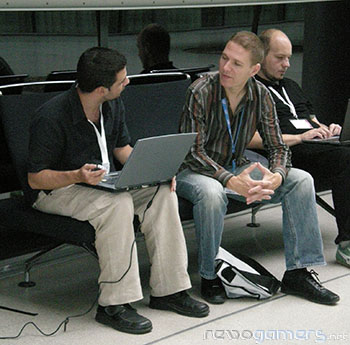
Después se ofreció en entrevista durante los días de feria. Revogamers tuvo la oportunidad de tener una amigable y exclusiva charla con el alemán, tan relajada como el transitado e improvisado entorno en el que se dio, tan profunda como los trucos para aprovechar el hardware de Wii. Y Wii ha sido el centro de esa discusión, temática que no parecía molestar, sino animar, al director del proyecto para PlayStation 3 que llena portadas en los últimos días.
Ayer publicamos los puntos destacados en noticia. Hoy disponéis del texto al completo a continuación. En las tres siguientes páginas se incluye la versión traducida al castellano , mientras que en las tres últimas se publica la entrevista íntegra original en inglés.
enviados especiales a Leipzig.
::comenta la visión de Eggebrecht con la comunidad::
Revogamers: Factor 5 comenzó aquí, en Alemania. ¿Qué piensas acerca de la posición actual de Alemania y Europa respecto a la industria de desarrollo?
Julian Eggebrecht: Creo que cuando decidimos irnos, en 1996, la situación estaba casi muerta a causa de muchos, muchos años de auténtico parón, especialmente en el desarrollo para videoconsolas. El desarrollo puntero era prácticamente imposible excepto para Gran Bretaña, ya no digamos en Alemania, donde era impensable. Pero con la vuelta de la era del PC nos fortalecimos y ahora, con las consolas, especialmente con Wii vendiéndose tan bien, creo que por primera vez en años tenemos una situación en Europa en la que puedes desarrollar con facilidad y casi con los mismos recursos y posibilidades que en la costa oeste de los EEUU. Así que creo que nos encontramos ante una gran oportunidad. Es curioso, estuve hablando de esto con los chicos de Crytek ayer mismo...
RG: Son de aquí.
JE: Claro, son de aquí. Cuando estuvimos hablando acerca de eso me dijeron: "entonces, ¿por qué os fuisteis?". Y contesté: "Si hubieseis estado aquí en 1995 también os habríais ido, creedme". Y me preguntaron: "¿Y entonces por qué seguís allí?" y sí, lo que pienso es que si hubiéramos estado entonces en la situación de ahora entonces nunca nos hubiéramos ido a los EEUU. Así que creo que tanto para Alemania como para sus vecinos existe una fantástica oportunidad ahora mismo.
RG: El mercado casual está creciendo todos los años y muchas compañías no quieren perder ese tren. ¿Qué piensas acerca de esta postura? ¿Están los sistemas de Sony y Microsoft ignorando el mercado casual? ¿Y qué hay de los juegos hardcore en Wii?
JE: Sí, ese es un tema delicado, especialmente en el contexto de nuestro juego, Lair, que viene a ser una mezcla entre un control que usa la detección de movimientos casual y un sistema de juego más hardcore. Así que, personalmente, no lo veo de esa forma porque soy capaz de adaptarme a ambas situaciones con facilidad y creo especialmente que los jugadores hardcore se están haciendo a sí mismos un flaco favor. A veces ven el control de Wii o el control del Sixaxis de PS3 como algo malo, como si los casuales, que son el nuevo mercado, quisieran arrebatarles su hobby; y esto no es así. Lo que necesitamos es contemplar otros modos de juego. Me refiero a que no todo pueden ser FPS y controles que requieran 25 botones, necesitamos también otras cosas y, ahora pienso como un jugador hardcore, puedo pasármelo en grande jugando un par de partidas rápidas con mis amigos a Wii Tennis y luego retomar Virtua Tennis y conseguir un saque perfecto. No soporto la tendencia actual de los jugadores hardcore que se quedan en su burbuja y adoptan una postura defensiva, rechazando de plano todo lo que sea casual. En el fondo esto es un único y enorme mercado y todos somos casuales en un grado u otro.
RG: Al principio todos fuimos casuales.
JE: ¡Sí! (Risas)
RG: También eres miembro de la GDC (Games Developers Conference). ¿Actualmente, qué atención recibe la opinión de los desarrolladores?
JE: Creo que mucha, mucha más que hace tres o cuatro años. Y todo tiene que ver con la dimensión que ha alcanzado esta industria. Con eso quiero decir que, cuando me oyes hablar acerca de los sistemas de calificación o mis quejas acerca de los mismo, ya es un hecho el que estamos hablando abiertamente de ello y también que se debata públicamente si los juegos son o no un tipo de arte, si esa forma de arte llega a todas las franjas de edad y cómo tiene que funcionar el sistema de calificación... Todo este debate es fantástica porque tendría que haber ocurrido hace diez años, pero la industria tenía que alcanzar un cierto tamaño para que progresara, así que creo que estamos en el mejor momento para ser escuchados. Y la clave es: no hay que fastidiarlo ahora.
RG: Hablemos de Nintendo. Conoces el hardware de Nintendo muy bien. Hace poco, te mostraste decepcionado con muchos estudios acerca de sus esfuerzos en el apartado gráfico en Wii. En una consola de éxito como ésta, ¿Por qué no vemos mejores juegos en el apartado visual?
 JE: Voy a hacer un pequeño inciso aquí, porque creo que la gente tomó mi comentario como que no me gusta el aspecto de Wii Sports, por ejemplo. Creo que lo que Nintendo está haciendo con Wii Sports está muy bien, porque están empleando el hardware justo lo necesario para lograr particularmente ese estilo. Mis quejas eran para aquellos juegos que intentan seguir el camino tradicional, el fotorrealismo, porque es ahí donde debes mostrar tus esfuerzos y explotar el hardware, y no lo están haciendo. ¿Por qué no? Pues no lo sé. El hardware es realmente fácil de entender. El problema podría ser, y sólo podría ser, que algunos estudios (o más bien algunos editores) están descartando las posibilidades gráficas automáticamente sólo porque es un título de Wii y están diciendo a los desarrolladores: mirad, no pagaremos por ningún tipo de gráficos avanzados. En Wii no es que vayas a alcanzar un presupuesto de 20 millones de dólares como en PS3, pero si quieres gráficos realmente buenos, en Wii tienes que gastar probablemente más dinero que yendo a la solución barata, así que tenemos un problema de base. Creo que en el fondo no se trata de la actual vagancia de ciertas desarrolladoras pero sí podría ser la incapacidad o la inexistente voluntad de ofrecerles un presupuesto para que hagan buenos gráficos.
RG: ¿Así que a lo mejor habría que culpar a las editoras en vez de a los estudios?
JE: Creo que en el fondo es una mezcla de las dos cosas, porque un desarrollador que esté trabajando en un título fotorrealista creo que tiene que tomárselo en serio. Tienen que ver más allá, ir a la editora y decir: "mirad, sólo porque hayamos hecho diez títulos con aspecto de tebeo no significa que éste no necesite gráficos diferentes, así que vayamos un poco más allá en el hardware. Nos estáis dando millones de dólares para que descubramos cómo ajustar nuestras herramientas al trabajo de la GPU de 360, así que queremos profundizar un poco más en la GPU de Wii" porque, evidentemente, se puede sacar más. Muchos lo han demostrado: RE4 de Capcom de forma evidente, y nosotros mismos, con la saga Rogue Squadron, hemos demostrado que puedes ir más allá con el hardware, así que no es un secreto que la solución está por ahí, en alguna parte. Pero tanto desarrolladores como editores deben asumir esta responsabilidad o deben abrirse a esa posibilidad porque si realmente quieren hacerlo encontraran un estilo gráfico sencillamente diferente, una solución más.
RG: ¿Podría ser por sus herramientas? ¿Sería más fácil si Wii tuviera los efectos shader estándar o es un problema el hecho de tener que preparar uno mismo los shaders?
JE: Seguramente lo más difícil para los desarrolladores que vienen por el camino tradicional es que el sistema de shaders que hay dentro del hardware es diferente. Tienes algo más que las típicas interfaces gráficas y las video pipelines. Porque el pensamiento en aquel entonces, cuando la estructura gráfica básica fue diseñada, era ser muy muy eficiente, y esto provocaba encadenamientos. Pero hay muchas formas de usar esos empalmes y reordenarlos en cierto modo, si eres lo suficientemente listo. Si lo conectas todo puedes conseguir muchos efectos shader que serían propios de 360 y PS3.
RG: Si los creas en Wii.
JE: Sí, porque en Wii tienes que ser más ingenioso. Pero por otro lado tiene mucha más potencia comparada con GameCube. Incluso con un hardware para shaders tan parecido, la velocidad de reloj es mucho más alta y puedes hacer cosas mucho más avanzadas, así que si la gente mira Rouge Leader, Rebel Strike y Resident Evil dirá este hardware es significativamente mejor, estos juegos deberían ser el mínimo a lo que aspirar y, a partir de ahí, progresar.
RG: Y con muchas más memoria...
JE: ¡Sí, exacto! ¡Y la memoria! Eso es algo muy interesante. Aparte de los shaders, la limitación principal que siempre encontramos en GameCube fue la memoria: era muy pequeña, nos ahogaba todo el tiempo. Era nuestro mayor problema. Cuando vimos las especificaciones de Wii nos emocionamos y dijimos: "wow, esta es exactamente la cantidad de memoria que necesitábamos".
RG: El problema de memoria que sufrías entonces.
JE: Sí, exacto. Hubiera sido nuestra "memoria soñada" (Risas)
RG: Siguiendo con eso, ¿has considerado la posibilidad de compartir vuestras herramientas de desarrollo con otros estudios? Porque Rebel Srtike era un juego visualmente impresionante.
JE: El motor de Star Wars nunca fue diseñado para venderselo a alguien porque nunca pensamos en él desde esa perspectiva. Si hiciéramos un nuevo motor o algo más actual, porque un motor ya con cuatro años..., sería el que se usó para las bases de Lair. Si hiciéramos una versión para Wii, ciertamente podría ser algo que podríamos licenciar. Pero no me limitaría a dejar el material de Rebel Strike a los demás porque ahora mismo creo que somos mucho más conscientes sobre los problemas de carga de la ruta de datos, cosa que vosotros, los chicos de la prensa, nunca llegáis a ver porque tratáis con los juegos acabados. Así que ahora todo esto lo tenemos mucho más controlado y fue bastante difícil en aquella época. No queremos retomar el motor antiguo, pero dicho esto yo haría un nuevo motor y ciertamente sería divertido hacer uno para Wii.
RG: ¿Así que empezaríais desde cero o harías un downgrade de lo que habéis usado en Lair?
JE: En cosas como la ruta de datos y similares, probablemente usaríamos exactamente lo mismo que usamos ahora (en Lair) porque es transferible. Pero hablando de shaders y cosas muy específicas como la física empezaríamos desde cero porque tienes que ligarlo mucho al hardware.
RG: Sólo una pregunta más acerca de este tema. Otras herramientas, como el Unreal Engine están siendo licenciadas y usadas por muchos estudios. No hemos visto ninguna versión modificada para la plataforma de Nintendo que podría sacar un provecho completo y fácil de sus posibilidades gráficas y de control. ¿Por qué?
JE: Creo que ese tema tendrías que preguntárselo a ellos. Pienso que cuanto más éxito tenga Wii, más se pensaran Epic y otros creadores de motores todo esto. Pero si su motor está planteado y construido para esta generación en los términos del hardware de PS3 y 360, entonces podrían tener algún problema, por ejemplo, reduciendo los tamaños de datos hasta un punto donde vayan fluidos en Wii. Aparte de todo esto, por lo general ellos no han trabajado mucho o nada con GameCube desde el punto de vista de los gráficos. Esto viene a colación de lo que preguntabas antes y no sé si con sus programas gráficos punteros estarían dispuestos a echarle un vistazo al hardware y hacer algo completamente nuevo. Pero puedo imaginar que saldrán varios motores, también para Wii, porque cuanto más éxito tienes, más se pregunta la gente acerca de los pros de la portabilidad. Pero es un tema algo escabroso, porque puedes coger un PC y decir: "para PC, 360 y PS3 todos tienen un arreglo para arrancar memoria", por ejemplo. ¡Eso es mucho más!, así que con todas sus estructuras de datos... ciertas partes inherentes al motor siempre asumen que tienes esa cantidad de memoria, así que es casi imposible llevarlo a Wii. Así que realmente depende de si tu motor fue diseñado para algo muy grande o muy pequeño y a veces es difícil hacer esta escala.
RG: Así que realmente no es cuestión de escalar, sino de rehacer.
JE: Precisamente.
RG: Mario Galaxy parece el mejor ejemplo de lo que Wii puede hacer. ¿Hasta dónde crees que puede llegar un estudio desde ese punto? Dicho de otra forma y en tu opinión: ¿Cuánto aprovecha este juego la potencia de la consola?
JE: No he visto todo Mario Galaxy...
RG: ¿Lo has probado?
JE: ¡Por supuesto! (Risas) Soy un gran fan de Mario, es el juego que espero con más ganas.
RG: ¡El nivel del pastel es increíble!
 JE: ¡Sí! (Risas) Lo espero con tantas ganas porque Mario Sunshine me dejó un poco decepcionado (probablemente como a la mayoría), ya que parecía que a la mitad de desarrollo habían perdido en cierto modo el interés en seguir haciendo el juego. Y Mario Galaxy es tan inspirado que parece merecer el éxito de Mario 64. Y, además, contemplándolo es el primero juego de Wii, con lo que vi en el E3, con el que dije: "sí se aprovecha de Wii, corre a 60 cuadros, hace nuevas operaciones gráficas con el hardware. Aunque habiendo dicho esto, también tiene cierta ventaja por poseer exactamente el estilo perfectamente adecuado para el hardware; no es que lo haga más fácil, pero aún así es una gran ventaja, ya que el estilo de Mario encaja con el hardware perfectamente y esa es la ventaja que están aprovechando. Creo que el mayor desafío que tienes en esa plataforma específica es tomar la ruta fotorrealista, porque en ese camino hay ciertas cosas para las que la estructura básica del hardware gráfico (de Wii) no fue pensado, y para las que tienes que encontrar trucos ingeniosos para básicamente maquillarlo. Y esta es la gran barrera del sistema y creo sinceramente que algunos desarrolladores lo entenderán. Ciertamente, si nosotros hiciéramos un juego para Wii lo intentaríamos de esta manera.
RG: Sería fantástico. Después de la saga Rogue Squadron y de Lair, ¿volaremos con Factor 5 en su próximo juego? ¿Alguna pista de cuándo y en qué plataformas?
 JE: (Risas) Todavía queda bastante y realmente no podemos decir nada acerca de la plataforma. Para ser francos estamos pensando en varios títulos para desarrollar y todavía no hemos decidido en que plataforma o plataformas hacerlo. Así que podría ser PS3, podría ser Wii... estamos totalmente abiertos a todo (risas).
RG: De acuerdo, la última pregunta. Estamos haciendo una encuesta para nuestros lectores, ¿cuál es tu juego, o proyecto, de Wii favorito?
JE: Hmmmmm, es interesante. Si tuviera que decidirme sólo por uno sería Mario Galaxy, pero también estoy interesado en Wii Fit. ¡Realmente el tema me tiene intrigado! No tanto como jugador, quiero decir que es tan casual como parece, sino en términos de que de qué tipo de software ingenioso se les ocurrirá con eso.
RG: ¡O qué tipo de software puedes hacer tú con eso!
JE: (Risas) No pero quiero decir que, como jugador, no puedo esperar por el Galaxy.
RG: De acuerdo, eso es todo. Muchas gracias, Julian.
JE: Gracias a vosotros, chicos.
This is the original English version of the interview that Julian Eggebrecht, Factor 5's president, offered to Revogamers at this year's Games Convention.
Revogamers: Factor 5 started here in Germany. What do you think about German and European development position in the industry nowadays?
Julian Eggebrecht: I think that when we decided to leave, which was in 1996, it was almost dead, because for many, many years it was a real slum in terms of console development, specially. And specially high-end console development was almost impossible except for Great Britain. But if you were from Germany, it was almost unthinkable. But with the resurgence of the age of the PC platform getting stronger but now that the consoles are coming back, specially with the Wii selling so extremely well, I think for the first time in many, many years, you actually have a pan-European situation where you can develop quite nicely, and almost with the same resources and possibilities as on the west coast in the USA. So I think it's a fantastic opportunity right know. It's funny I was chatting with the guys form Crytek yesterday...
RG: They're from here
JE: They're from here, of course, and we were talking about it and they said "so, why did you guys leave back then" and I said "If you would've been here in 95, you would've left as well, believe me". And then he asked me "so know it is why you're staying" and I think yeah, it's most likely if we were in the same position nowadays, then we wouldn't have to go to the USA. So it's a great and a fantastic opportunity right now for Germany and all of the surrounding countries.
RG: The casual gaming market is growing every year, and many companies don't want to miss the train. What do you think about their approach? Are they ignoring the casual gaming on Sony and MS systems? And what about the hardcore gaming on Wii?
JE: Yeah, that's a very controversial subject, specially in the context of our game Lair, which is kind of a mixture between casual-motion controlled dynamics and more hardcore gameplay. So, I personally don't look at it that way, because I personally play both sides easily, and I think that specially the hardcore gamers are doing themselves a disservice. But sometimes looking at the Wii motion control, or motion control with the Sixasis on the PS3, looking at that as something bad, almost as if the casual people of the larger outside market wants to take away their hobby... that's not the case. What we need to do is embrace other styles of playing, I mean it can't be only about first person shooters and controls which need 25 buttons, it also needs to be about other things and I think as a hardcore player, I can have as much fun playing the quick round with four friends on Wii Tennis and then get back to Virtua Tennis and get down to the perfect serve. I really hate the current trend of the hardcore people very much getting into this bubble of being very defensive and not wanting the whole casual thing to happen. In the end it's all one big market we're, essentially we're all casual to a certain degree.
RG: We were casuals at the first time
JE: Yeah! (laughs)
RG: You're a board member of the GDC (Game Developers Conference). How are developers' words listened today?
JE: I think much, much more than even three, four years ago. And it has to do with the size of the ent. industry nowadays. I mean when you listen to my talk about the ratings, or my complaints about the rating systems in place. The fact alone that we're discussing these things and that we can talk openly about it and it's discussed within the society, if games really are an artform, and if it is an artform it does expand pretty much every age group and how does their rating system need to work. All of that discussion is fantastic because it should've happen ten years ago, but the industry had to reach a certain size for this discussion to go forward, so I think we're in a better position to be heard than ever. And the word of poison there is: we shouldn't screw it up.
RG: Let's talk about Nintendo, You know Nintendo's hardware very well. Recently, you showed yourself disappointed with many studios graphical efforts on the Wii. In a hot selling machine like this, why don't we see many great looking games?
JE: There's a distinction between... because I think people took my comments as that I don't like the look for example for Wii Sports. I think what Nintendo is doing in the Wii Sports is perfectly fine because they're utilising the hardware for that style exactly as much as they need to utilise it. My complaints were actually about the games which try to go the traditional, more photorealistic route, because there you really have to push it, and they're really not pushing it. Why not? Hmmm I don't know, the hardware is very, very easy to understand. Now the problem might be -and it just might be- is that some studios -or some publishers specially- are discarding the graphical capabilities automatically simply because it is a Wii title and they're basically telling the developers "look, we won't pay for any advanced graphics". Because the Wii, I mean not that you would meet a 20 million dollar budget like on the PS3, but if you want to get really, really advanced graphics out of the Wii, then you have to spend probably more money than basically going for the cheap solution, so that might be an inherit problem, so it might actually not be the laziness of certain developers, but it might be the... inability or the non existent willingness of the publishers to actually give them in a budget to do better graphics.
RG: So maybe we can blame the publishers instead of the studios?
JE: I think that at the end of the day it's a mixture of both, because as a developer who is working on a more photorealistic title I think they also have to step up to the plate. They've to take a look a bit deeper and then go to the publisher and say look, just because we've done ten comic book type graphic titles, this one needs different graphics, so let's take a look a bit deeper into the hardware. You're giving us millions of dollars to find out how our assets end in the 360 GPU's work, we want to take a look a bit deeper into the Wii GPU because obviously you can do more. Many have proven... Resident Evil 4 clearly from Capcom or our own Rogue Squadron series has prove that you can do a lot more with the hardware, so it's not secret that it's in there, somewhere. But developers need to step up to the plate and the publishers as well... or they need to be open about it and if they're really willing to do it then they need to find the graphical style which is simply different, I mean that's another solution they have there.
RG: Can it be because of their tools? That it would be easier if the Wii had standard shader effects... or is it a matter of work because you have to prepare the shaders for yourself?
JE: The one thing which makes it probably harder for developers who are coming from the traditional direction is that the shader system inside the hardware works quite differently, you have something more right about that than the traditional AGI and the video pipelines. Because the thinking back when the basic graphics hardware structure was developed was to get very, very efficient, that hotwired a lot of things. But there're many possibilities in terms of how to use that hotwiring and actually rewire it, if you're clever about it. If you connect you can get a lot of shader effects which would've been on the 360 or the PS3.
RG: If you "create" them on the Wii
JE: Yeah, because... on the Wii, you just have to be more ingenious. But the Wii, on the other hand... I mean, think about it: it's got so much more power compared to the GameCube. If even with the extremely similar shader hardware, the system clockrate is so much higher, you can do so much more advanced things, so if people just would look at Rouge Leader, Rebel Strike and Resident Evil 4 and then say: this hardware is significantly faster than those games it should have the very minimum they should get that and then they should build on top of it.
RG: And with much more memory...
JE: Yeah, exactly, and the memory! That is a very good point. Aside from the shaders, our main limitation which we always found on the GameCube was the memory: the memory was a struggle the whole time; it was a very hard struggle. That was actually our biggest struggle. When we got the Wii specifications we were excited because we said "wow, this is actually the amount of memory which we needed"
RG: The memory problem you had before
JE: Yes, exactly, that would've been our "dream memory". (laughs)
RG: Going with that... have you considered the option of sharing your previous development tools with other studios? Because Rebel Strike was an awesome looking game.
JE: The Star Wars engine was never developed in a way that you can just sell it to somebody, because we never thought of it as something sellable. If we would do a new engine or something which is more around or current engine because with four years... it'll be the one which is basically been used as the basis for Lair. If we would do a Wii version of that, certainly that could be something which somebody could license. But I wouldn't just drop the old Rebel Strike stuff just onto somebody, because at this time I think we're so much more clever about the load of the data path issues, which you guys in the press never see because you get to see the finished game. So all of these things now that we're much more clever about. And it was way too painful back then. We don't want to take up the old engine, but having said that I would do a new engine, and certainly it'd be fun to do that on the Wii.
RG: So would you start from zero or downgrade something that you've been using on Lair?
JE: In terms of the data path and things like that, we would probably use what we're using nowadays really exactly because you can transfer that over. In terms of shaders and very specific things like physics, we would start from scratch, because you need to tail up that very much to the hardware.
RG: Just one more question about that thing. Some other tools like the Unreal Engine are widely and easily licensed and used by many studios. We haven't seen a modified version of them for the Nintendo platform, which could make a full and easier use of its graphical and control possibilities. Why?
JE: I think the issue with that... you would have to ask them. I think the more successful the Wii platform gets, the more Epic and other engine vendors will probably think about the whole thing. But if their engine is all thought about and all built around the current generation in terms of 360 and PS3 graphics hardware, then they might have a problem actually getting for example the data sizes down to a point where they work nicely on the Wii. Outside of that this guys usually haven't work much or at all in the GameCube days on the graphics side, and that comes down to exactly what you were asking earlier and I don't know if with their high end graphics program... as they're willing to look at the hardware and do something completely new. But I can imagine that there will be several engines coming out, also for the Wii, because the more successful it gets, the more people will ask about the pros of portability. But it is a tricky issue because you can take the PC and then you say "for the PC and the PS3 and the 360, all have an arrange to kick off memory" for example. That's so much more!, so all of your data structures... certain things within the engine always assume that you have that much memory, it might be practically impossible to go over to the Wii. So it really depends on your engine and if it was designed in mind with something very small and very large, and it's sometimes not very easy to scale in very large and very small.
RG: So then it's not a matter of scaling but maybe reworking
JE: Yes, exactly.
RG: Mario Galaxy seems the best example of what the Wii can do. How far do you think a studio can go from that point? In other words, how much does the game use the power of the system in your opinion?
JE: I haven't seen all of Mario Galaxy...
RG: Have you tried it?
JE: Yeah, of course! (laughs) I'm a huge Mario fan, it's the one I'm looking forward to the most.
RG: Oh the cake stage is awesome!
JE: Yeah! (laughs) No, I'm so looking forward to it because I was a little disappointed (as probably most were) with Mario Sunshine because it seemed that at the half point they kind of lost interest in making the game. And Mario Galaxy is so inspired that it seems to be worth the success of Mario 64. And with that also, certainly looking at it, it's the first game -also which I saw at E3- where I said "yes, this thing is actually taking advantage, it's running at 60fps, it's basically doing new graphical things with the hardware. Having said that though, it's nice because of the things it's doing; it also does have certain advantage by having exactly the perfectly right style for the hardware. Doesn't make it easier at all, but nevertheless they have a big advantage due to that, because, of course, the Mario style just fits their hardware absolutely perfectly, and they're taking nice advantage of it. I think the biggest challenge which you have on that specific hardware platform is to go into the photorealistic route, because in the photorealistic route there're certain things which the basic structure of the graphics hardware was not meant for and which you have to find really clever tricks to basically make up. And that's kind of the next... that's the big barrier on the platform. I think certain developers will grab it. Certainly, if we would do a Wii game, we would try to do that.
RG: That'd be fantastic. After the Rogue Squadron series and Lair, will we be flying with Factor 5's next game? Any clues on when and in which platforms?
JE: (laughs) Hmmm... it's going to be a while and we actually cannot say anything about the platform yet. We're honestly at this point thinking about several titles in development and we haven't settled quite yet on which platform or which platforms if one of them is. So might be PS3, might be Wii... we're totally open to that. (laughs)
RG: Ok, the last question... we're making a poll for our readers, what's your favourite Wii game or project at the moment?
JE: Hmmm... it's interesting, if I have to go just for one it's Mario Galaxy, but I'm almost as interested in Wii Fit actually, because the whole thing is just intriguing!. Not so much as a gamer, I mean that's as casual as it gets, but just in terms of what they come up with in terms of clever software is the case...
RG: Or what You can come up with!
JE: (laughs) No, but I mean, personally as a gamer I can't wait for Galaxy
RG: Ok, that's all, thank you very much, Julian.
JE: Thank you guys.
Lo más leído en Entrevistas
Ver todos →-
 Project C.A.R.S: Quisimos trabajar en Wii U desde el primer día
Entrevista
4.406
-
 EnjoyUp: 5 juegos para Wii U Made in Spain
Entrevista
3.975
-
 Unepic, la esencia del juego indie
Entrevista
2.646
-
 Cubit the Robot: desarrollando para 3DS en solitario
Entrevista
2.349
-
 Entrevista a Pepe Arcas, de Nintendo Ibérica
Entrevista
2.285